- Market Info
Ten Years of Norwegian Investment in France: 2015–2025.
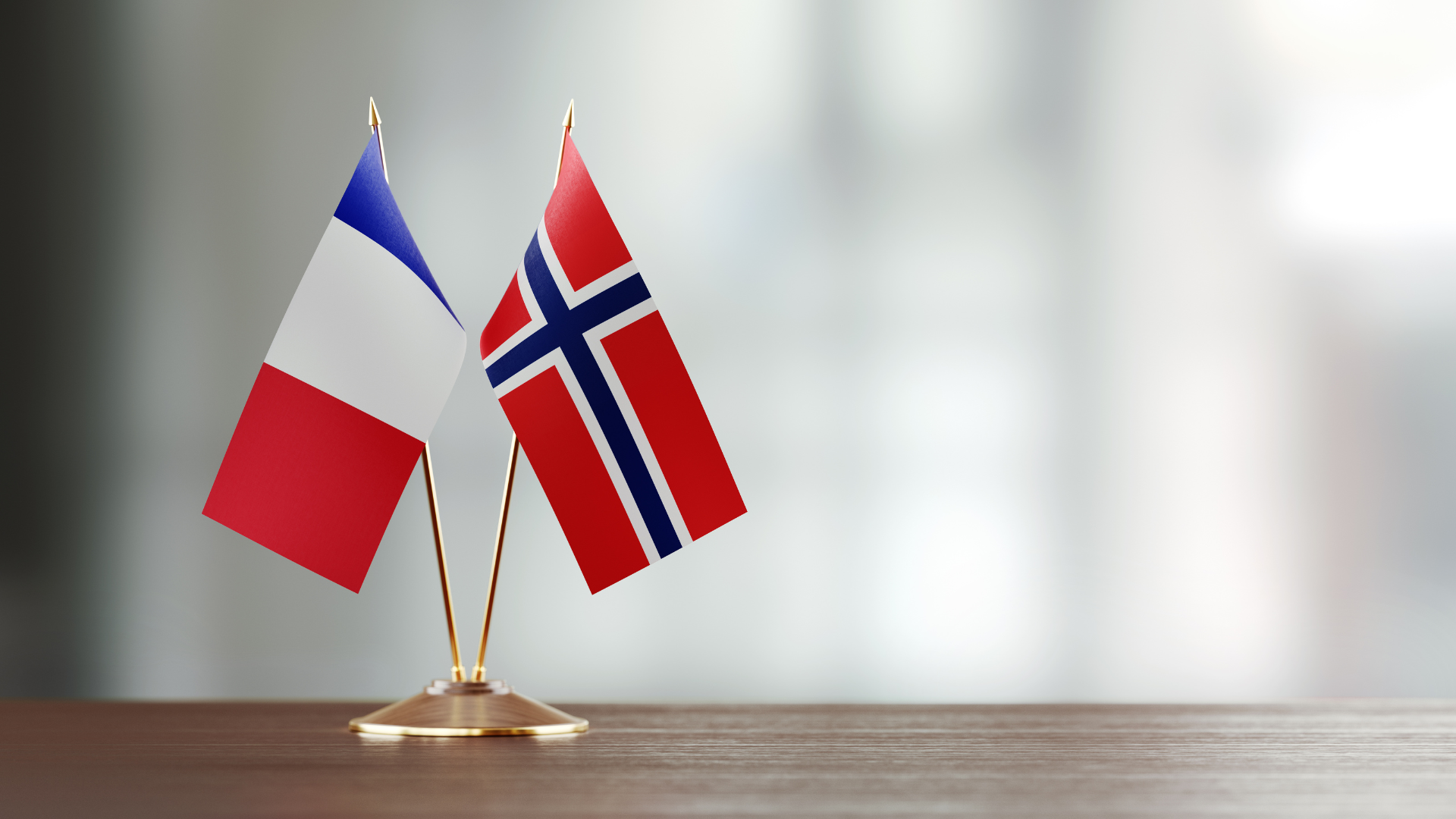
When Norwegian Prime Minister Jonas Gahr Støre visited the Élysée at the end of May 2026, the message went far beyond a courtesy visit. One year after President Emmanuel Macron’s official visit to Norway in June 2025, bilateral relations have further deepened in key strategic sectors such as energy, strategic industries, and European sovereignty. But above all, the discussions placed greater emphasis on defence. Norway’s decision to become the ninth country to join France’s “advanced deterrence” initiative, and the third Nordic country to do so, after Sweden and Denmark, illustrates the significant progress made in the Franco-Norwegian partnership. [1][2]
This helps explain another long-term trend: over the past decade, Norwegian companies have steadily expanded their footprint in France. What began as a relationship anchored largely in traditional industry has gradually widened to include green industry, digital services and strategic technologies, making Norway an increasingly relevant Nordic investor in France.
A decade marked by a broader presence and stronger attractiveness
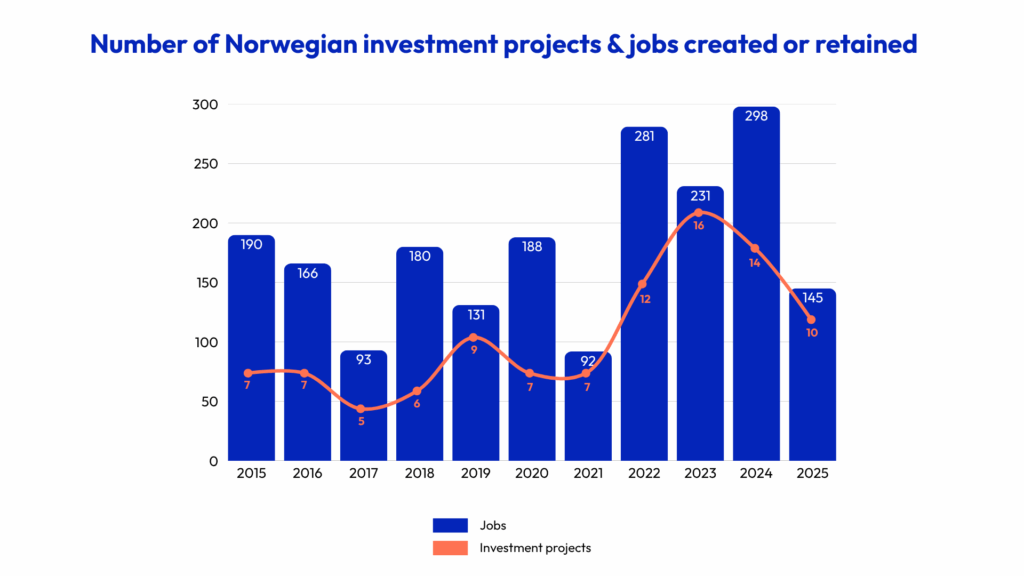
France remains a particularly favourable environment for this evolution. In 2025, it retained its position as Europe’s leading destination for foreign investment projects for the 7th consecutive year, according to EY. [3] Norwegian investment fits into this dynamic, with 100 foreign direct investment projects recorded in France between 2015 and 2025, generating 1,995 jobs.
The momentum became particularly evident post-covid with the number of Norwegian investment projects in France growing. 2024 stood out as the best year of the decade for employment, generating a record 298 jobs through 14 major projects.
Over ten years, employment under Norwegian control in France rose from around 6,700 to 8,700, an increase of roughly 30%. Norway has therefore consolidated its place as the third Nordic investor, behind Sweden and Denmark but still ahead of Finland.
An Economic Footprint Built on Structuring Industries
Norway’s economic footprint in France remains anchored in long-established industrial sectors. Manufacturing, chemicals and materials account for over half of Norwegian-controlled jobs in France, roughly 4,600 positions, supported by major groups such as Hydro (aluminium), Elkem (silicon and advanced materials), and Norske Skog (paper and wood-based materials).
Agro-business also remains an important component, contributing more than 500 jobs in France, notably through seafood and food-processing companies such as Mowi and Lerøy Seafood. This presence reflects Norway’s global leadership in seafood and its ability to invest along the value chain in key consumer markets such as France, which is Europe’s largest salmon markets and one of Norway’s most important seafood destinations.
France 2030 is opening new ground for Norwegian green and digital investment
One of the clearest features of Norwegian investment in France over the 2015–2025 period is the growing importance of sectors linked to the energy transition, circular industry, and digital or IT services.
IT, media and digital services now account for around 35% of the Norwegian employment footprint in France, or roughly 3,000 jobs, driven by the expansion of players such as Adevinta/Leboncoin (today owned by US private equity firms Blackstone and Permira), Sector Alarm (security services) and Visma (cloud business software).
Furthermore, Norwegian investment in France increasingly fits within the logic of France 2030, the country’s €54 billion investment plan for innovation, reindustrialisation and decarbonisation. Industrial decarbonisation alone represents around €4.5 billion in public support, making it one of the clearest areas of synergy between France and Norway.[4] The Yara–Lhyfe project in Le Havre is a strong example of this convergence. Supported by up to €149 million in French public funding, it aims to build a 100 MW green hydrogen production site to help decarbonise one of Europe’s largest industrial-port zones and support lower-carbon fertiliser production in France.[5]
France and Norway: A Favorable Bilateral Framework for Investment
What the 2015–2025 decade ultimately reveals is not just a rise in project numbers. It shows the gradual emergence of a more strategic Franco-Norwegian investment relationship.
This bilateral momentum did not emerge overnight. It builds on the strategic partnership on green industrial transformation signed in January 2024, which aimed to facilitate trade, investment, innovation and R&D cooperation between the two countries, with a focus on carbon capture and storage, renewable energy industries and critical raw materials. [6] That framework became more operational in March 2026, when Bpifrance and Innovation Norway signed an MoU aimed at supporting new industrial partnerships and cross-border investment projects in green and strategic sectors. [7]
The outlook for the coming years is highly positive. These investments should continue to strengthen our bilateral relations, particularly in the green and digital sectors, which foster closer ties between the two countries.
Interested in investing in France? Get in touch with our Business France teams to explore next opportunities.
Written by Paul AUZELOUX
*Data are drawn from Business France Nordics’ records of investment projects and associated jobs since 1993.
References
[2] President of France to pay official visit to Norway
[4] France 2030: Strategy to accelerate the decarbonisation of industry, DGE
May interest you
Ten Years of Finnish Investment in France: 2015–2025
Ten Years of Danish Investment in France: 2015–2025
Nordic–French Bluetech Synergies: Investing in Europe’s Leading Maritime Powerhouse

France-Nordics Greentech Alliance: Building Europe’s Decarbonized Sovereignty in 2026
France and Nordics cooperation on rare earths